

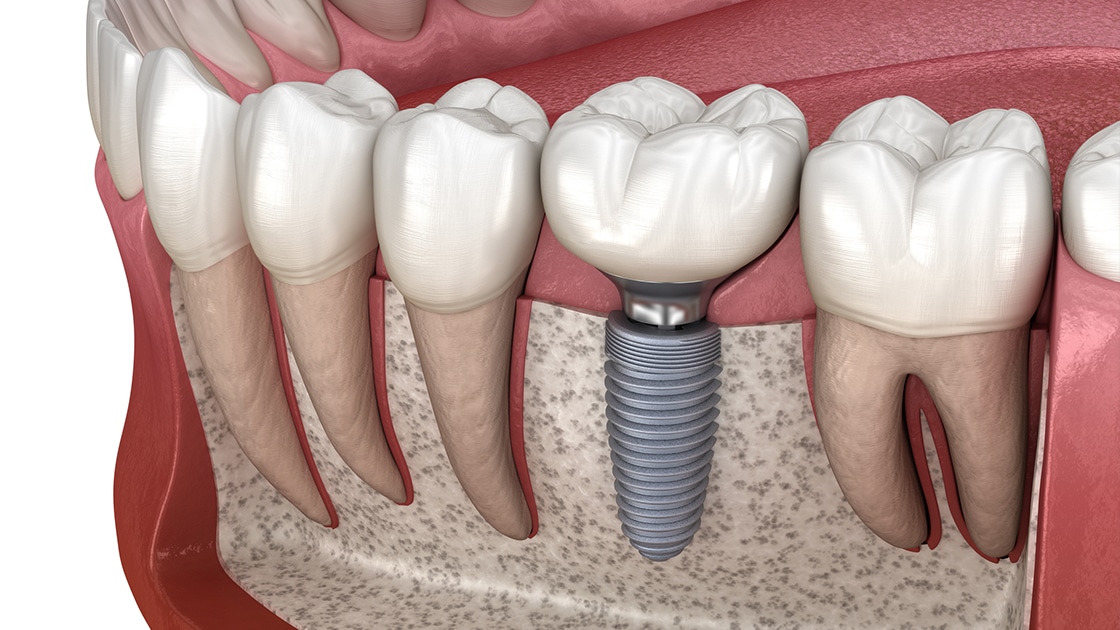
What is a Dental Implant?
Dental implants are small anchors made of a biocompatible metal called titanium that are placed in the jawbone. Dental implants are the replacement of tooth roots in the mouth. Once placed, the anchors begin to fuse with the bone over the course of a few months. After the fusing process, known as osseointegration, abutment posts are inserted into the anchors to allow for the permanent attachment of the replacement teeth.
Understanding how dental implant surgery work can help patients make informed decisions about their oral health and dental care. Implants are the best solution for simulating the look, feel, and function of natural teeth. Dental implants do much more than replace missing teeth, they also help maintain the health of neighboring teeth and gums more predictably and reliably. They also help maintain bone structure, aid in preventing bone loss, provide the ability to chew healthy food and give patients the confidence to smile.
Implant Supported Bridges
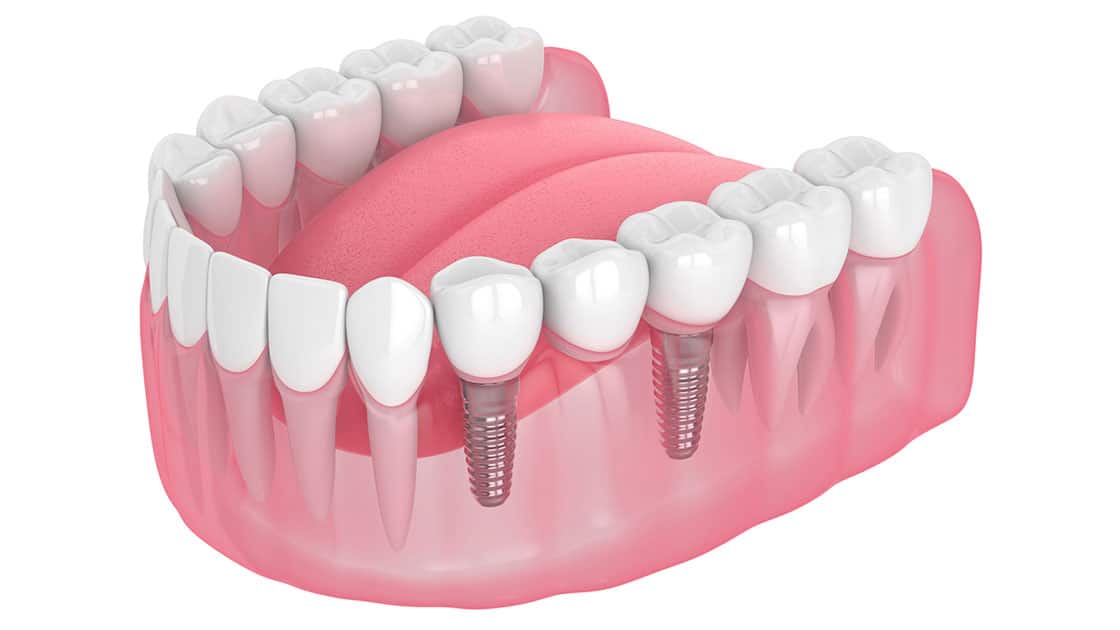
An implant supported bridge is a restorative solution for spaces where three or more adjacent teeth are missing. This treatment typically requires two implants to support the porcelain bridge. The bridge provides a functional and aesthetic replacement for a patient’s natural teeth.
What are the advantages of an implant supported bridge?
Because of the natural appearance and feel of the porcelain and the functional stability provided by the implants, implant supported bridges are an effective solution to replace missing teeth. A traditional bridge uses teeth on either side of the gap where teeth are missing for support. An implant supported bridge uses two or more dental implants rather than the adjacent teeth. When a bridge uses natural teeth for attachment, the natural teeth must be prepped for crowns and are then subject to increased stress which may be damaging – particularly if the entire tooth, roots, or surrounding bone structure are already compromised. A dental implant supported bridge restores your missing teeth and avoids putting any additional stress on your natural teeth.
Fully Edentulous (Toothless) Solutions
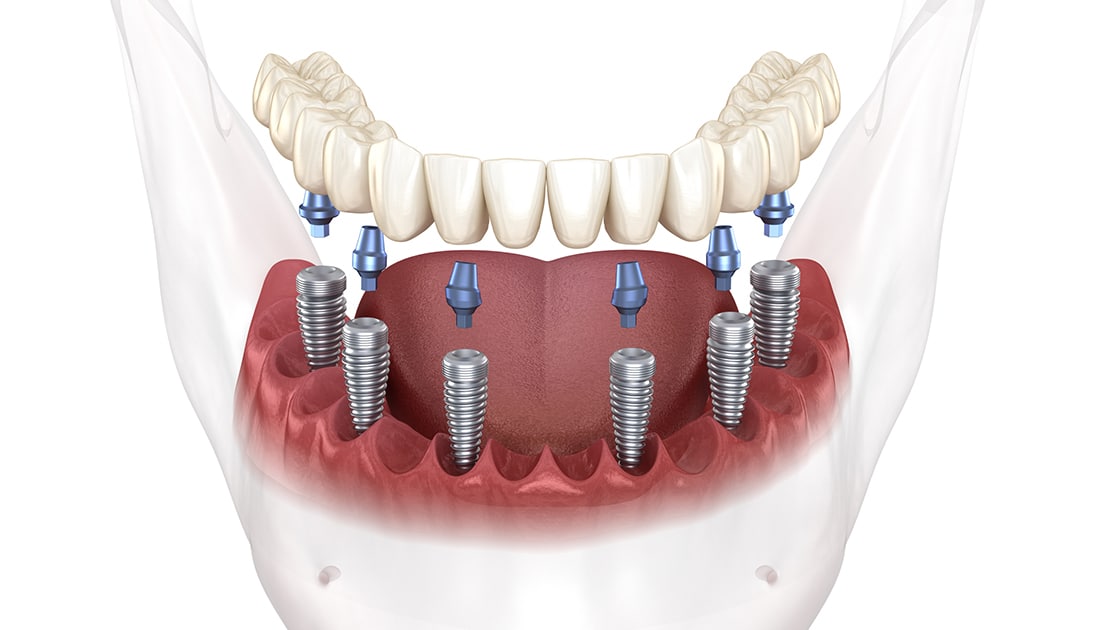
For patients missing many or all of their teeth, implant retained or implant supported dentures may be an alternative to traditional dentures. These solutions can simulate the look and feel of natural teeth and stay fixed in place with the implants acting as anchors. Using implants for retention or the support of dentures allows for a smaller and more comfortable base and less shifting of the prosthesis during use.
Mini Dental Implants (MDIs)
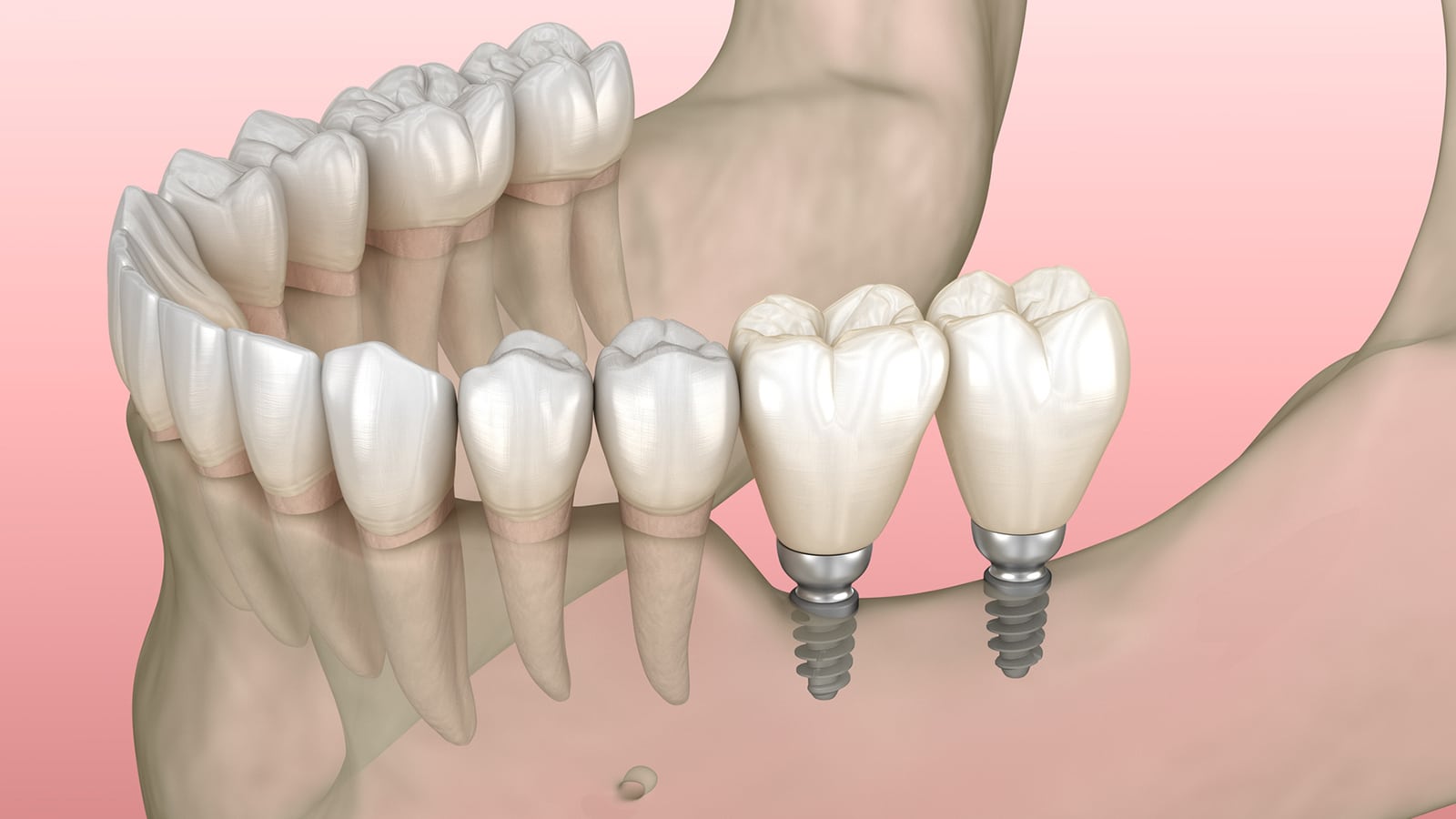
There are times when a full size implant is not a viable option, and in many cases an MDI may be a great solution. Small spaces or inadequate bone mass in the jaw may prevent the use of traditional implants. Mini Dental Implants are similar to regular implants but, as the name suggests, are significantly smaller in diameter. The placement of MDIs is minimally invasive, often requiring only local anesthetic and no sutures. This approach supports a smooth recovery and, for this reason, MDIs can often be performed with the final replacement tooth in one day.
How are mini dental implants different from standard dental implants?
In traditional implants, an abutment is attached to the titanium implant screw, and the tooth restoration is then placed on the abutment as shown here.
MDIs are approximately half the diameter of a traditional implant and use a titanium post, rather than a screw. Instead of an abutment piece that supports the final restoration, MDIs use a ball and socket attachment system. The ball on the end of the titanium post (shown above) provides the attachment point for the o-ring in the replacement tooth.
Similarities between MDIs and full-size dental implants:
- The implant post is inserted into the jawbone.
- The implants, once inserted into the jawbone, are fixed in place.
- The implant serves to replace the tooth root and anchor replacement teeth.
- The placement of the implant can prompt bone regeneration around the placement site.
- The implant can be used to support one tooth or more for crowns or bridges and can also help provide support for removable lower arch dentures.
MDIs may be preferable to full-size dental implants in the following situations:
- Bone mass in the jaw is insufficient to support a full-size implant screw.
- There is a small space or gap into which to insert the fabricated tooth (such as an incisor as opposed to a molar).
- Children or young adults have congenitally missing teeth.
- Minimally invasive techniques are required due to health or other reasons.
What Are Dental Implants for Missing or Damaged Teeth?
Dental implants are a tooth replacement option for one or more missing or damaged teeth. When a tooth is too decayed or damaged to be saved, it will need to be extracted and replaced. A dental implant is an artificial tooth root made of titanium that is surgically placed in the jaw bone. The implant fuses with the bone to form a solid bond that is capable of supporting an artificial tooth. Multiple implants can be placed in the jaw to support a bridge or dentures.
Queens Crown Dental provides dental implants in Honolulu, Hawaii. Call 808-526-2800 or contact us today to schedule an appointment.
Benefits of Dental Implant Procedures
Dental implants are considered to be the highest quality tooth replacement option available because of the following benefits:
- Natural function. A dental implant functions like a natural tooth, providing equivalent bite strength and chewing force.
- Natural look. Because it attaches to the jaw like a natural tooth and the crown is custom made of porcelain that resembles tooth enamel, a dental implant looks very realistic, blending right in with your existing teeth.
- Can last a lifetime. Once the bond is established between the jaw bone and the implant, it can last forever.
- Preserves bone structure in the jaw. An implant keeps the jaw bone strong, helping prevent bone loss and the usual deterioration that would occur after a tooth is extracted and left unreplaced.
- Does not compromise other teeth. Unlike a bridge that requires the healthy teeth to be altered and fitted with crowns, a dental implant has no effect on your other teeth.
Types of Implant Restorations
- Single tooth replacement. A single implant and crown combination can be used to replace a single tooth.
- Implant supported bridge. When a few adjacent teeth need to be replaced, an implant supported bridge can be used with an implant on each end of the bridge.
- Implant supported dentures. For patients who need all or the majority of their teeth replaced, implant supported dentures provide a secure restoration. 4-6 implants can be placed in the jaw to support a full arch denture that can be either fixed or removable.
- Mini dental implants. Mini dental implants are smaller than traditional implants and are often used for patients who don’t have enough bone structure in the jaw to support regular implants.
Are You a Good Candidate for Dental Implants?
If you have one or more teeth that are missing or too damaged to save, you may be a good candidate to receive dental implants. Whether you need to replace one, multiple, or all of your teeth, implants provide a replacement option for most patients.
There is one problem that could delay your readiness for a dental implant. If one or more teeth have been missing for an extended period of time, the jaw bone in those areas may have weakened and dissolved due to bone loss, meaning it is unfit to support an implant. However, there is a solution to this common occurrence. A bone graft procedure can strengthen and regenerate your jaw bone by placing a bone fragment on top of the existing bone. A few months later, if the bone graft is successful, you may be ready to undergo implant surgery. In some cases mini implants may be used instead of traditional implants because they are smaller for patients with less bone structure available.
Why Choose Queens Crown Dental?
The key to a successful dental implant restoration is accurate placement. Queens Crown Dental has the dental experience to place dental implants accurately using advanced techniques and computer technology to achieve proper angle and depth. Our dentist and team work hard to provide a wide variety of implant options to make this advanced treatment viable for as many patients as possible. Patients love the results they achieve at our practice and the compassionate dental care we provide for their overall well-being.
Frequently Asked Questions
Is dental implant placement painful?
Anesthesia will be used to ensure you feel comfortable and have a painless procedure. We provide sedation options for patients who are nervous or anxious about dental surgery to help you feel calm and relaxed. Some discomfort after the procedure is normal, and our team will guide you through recovery, including a soft food diet during the healing period, to minimize complications and risk.
How long does it take to get dental implants?
The procedure to place a dental implant can take anywhere from 1-2 hours depending on how many implants are being placed. Healing can take 3-6 months after placement. The overall process can take between 6 months and a year to have your full restoration completed.
Are dental implants covered by insurance?
Most dental insurance plans don’t usually cover dental implants because they are considered to be a cosmetic procedure. Contact your insurance provider to determine whether or not the procedure is covered by your plan. If not, financing is available to make the cost of dental implants more affordable.
What are the benefits of implant supported dentures?
Implant supported dentures are more secure than traditional dentures because the implants act as anchors to hold them in place. They stay in place more effectively when eating and talking and won’t pinch or chafe your gums.
How do I care for my dental implants?
Proper care for dental implants is similar to caring for your natural teeth. Brush twice daily, floss regularly, and maintain routine visits to our office. Keeping bacteria at bay helps restore and protect your oral health and reduces the risk of cavities and other complications that could affect the implant or surrounding gums. Good habits create lasting results and support the long-term success of your dental implant procedures.
To learn more, call 808-526-2800 or contact us today to schedule an appointment.